
Although marine batteries are durable, they can still drain. A boat, jet ski, or personal watercraft is frequently kept in dry storage or on a trailer for half of the year. Let's move on to your water toys. To avoid being stranded on the water with a dead battery, it's a small investment. Fish finders, radios, and bilge pumps are all capable of pulling power even when the engine is not running. A marine-specific trickle charger with corrosion-resistant clips keeps the battery full without causing the electrolyte to boil.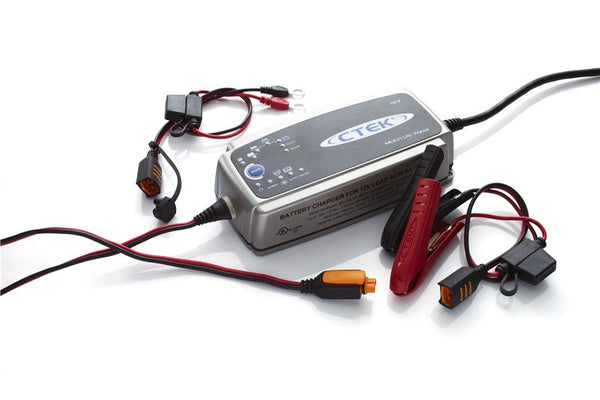 They counteract batteries' inherent propensity to lose charge over time by providing a steady, gentle flow of energy. These devices, which preserve power in cars, motorcycles, boats, and seasonal equipment, are highly recommended by both enthusiasts and regular drivers. When life prevents you from driving frequently, a trickle charger provides an easy yet effective way to keep your car's battery in great shape. Knowing what happens to a battery when it's left alone can help you understand why this is important.
By restoring the lost energy before it becomes an issue, a trickle charger prevents this and keeps the battery fully charged and operational whenever you need it. The battery itself loses energy through a process known as self-discharge, and clocks, alarm systems, and other onboard electronics drain the charge. Even when a car is turned off, tiny amounts of current still flow through the battery. Your battery may eventually become too weak to start the engine due to this gradual leak.
Solar-powered trickle chargers are an additional choice, particularly for users who care about the environment or live in remote areas, but their effectiveness depends on steady sunlight. In order to improve efficiency and safety, advanced models may even modify the charging rate in response to temperature or battery condition. It is simple to use a trickle charger. Reverse polarity protection, automatic shut-off, and compatibility with various battery types, including lead-acid, AGM, and gel, are features found in some versions.
The majority of models plug into a regular electrical outlet and are connected to the battery by two cables: one positive (red) and one negative (black). Keyless entry, the security system, and the infotainment system all consume power. Perhaps you work from home and your car is parked for a week at a time. Your regular car may also be a contender. There are numerous electronics sign in modern cars that never really shut off. The engine may start up more slowly after a week or two.
Its battery can die without warning. Do you drive a second car on occasion, or is it a teen's first car that is parked most of the time?